A Quest for Wisdom with a Top Mathematician
September 18, 2026
September 18, 2026
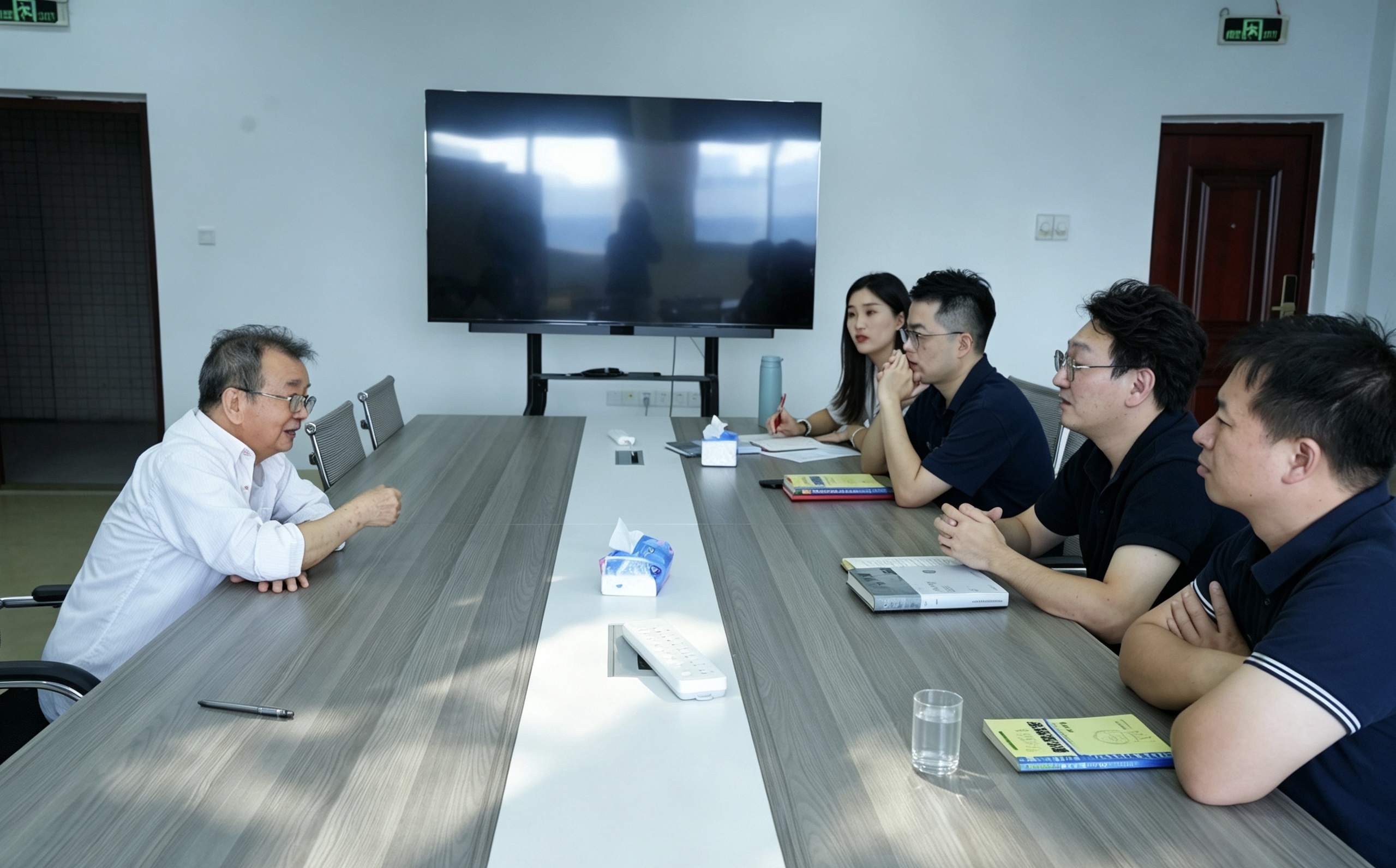
Recently, the GOS Math Department visited Guangzhou University to meet with Professor Zhang Jingzhong, an Academician of the Chinese Academy of Sciences and a renowned mathematics educator. They sought his guidance on fundamental mathematics education practices, as well as the application of AI in mathematics learning and classroom teaching.

Professor Zhang is the founder of the “Educational Mathematics” approach in China. He has long been dedicated to researching how to make mathematics easier to learn and teach, with sustained work in fundamental mathematics education, machine theorem proving, and intelligent mathematics education technology. His influence on mathematics teaching reform in primary and secondary schools has been profound.
During the communication, the math staff engaged in discussions with Professor Zhang, focusing on real teaching scenarios in lower Secondary math lessons. They proposed some common questions in fundamental math teaching—in particular, how to integrate the traditional pedagogue into a broader context of international education, how to conduct teaching efficiently and with high quality, and how to put AI tools to work appropriately in teaching and learning. Professor Zhang answered by his reflections and thoughts via his experience on fundamental education and the application of intelligent math tools. He encouraged the teachers that the essence of math education lies in enabling students to truly understand the nature of math, rather than dogmatically memorizing formulas and theorems, that it is necessary to balance imparting knowledge and protecting students’ curiosity and thirst for learning.
At the end, the Math Department presented Professor Zhang with a copy of Euler’s Elements of Algebra, a translated work completed collectively by the group, and expressed sincere gratitude for the preface he wrote for the book.

The visit was a quest for wisdom, and also an inspiration of thought. Through face-to-face exchanges with Professor Zhang, the staff gained a better understanding of the “Educational Mathematics” approach and a clearer vision of the direction for lower Secondary math teaching. They will bring the insights gained from the visit into daily teaching to make more students experience the charm of math itself.
Green Oasis School is a proud supporter of the International Task Force for Child Protection (ITFCP) new standards for child protection. The expectations of GOS are based on the following principles: • All children have equal rights to be protected from harm and abuse. • Everybody has a responsibility to support the protection of children. • All actions on child protection are taken in the best interests of the child.